
-

- Heading out
-

- At the half-way point
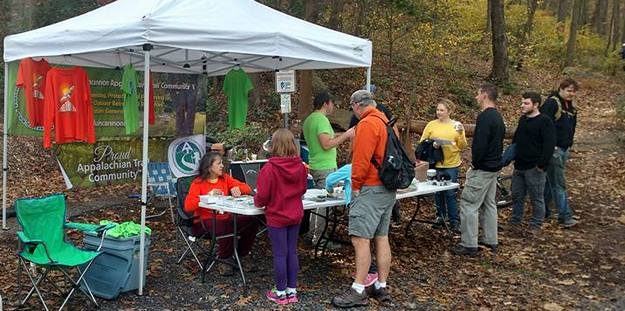
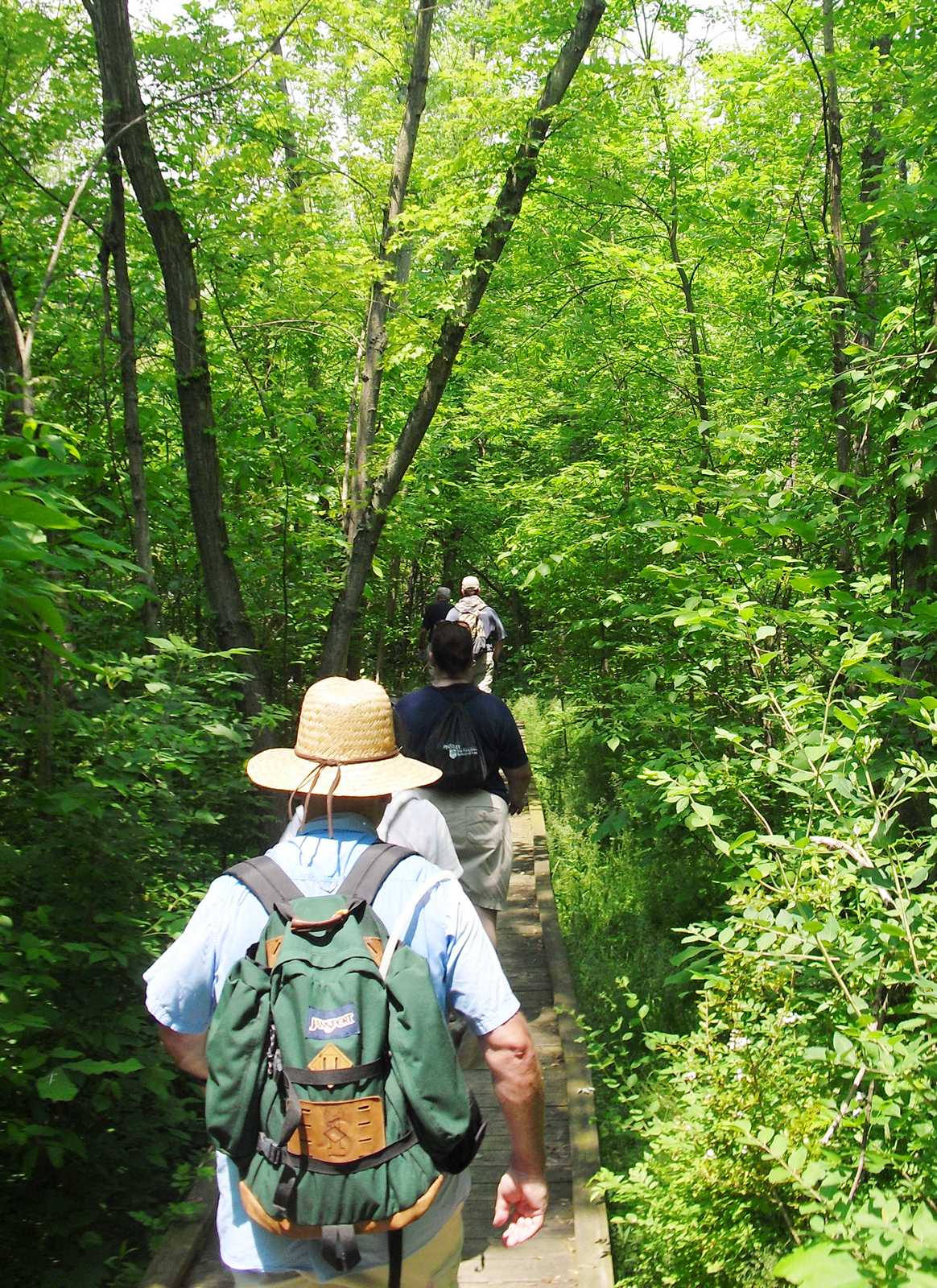
We had a good turnout for the August, out and back hike from Scott’s Farm to Sherwood Drive and were fortunate enough to have some very energetic youngsters. Toward the half way mark though they started to show signs of fatigue, until it was suggested that they lead the hike back. Boy! Did we ever see a revitalization in energy! It was hard to keep up.
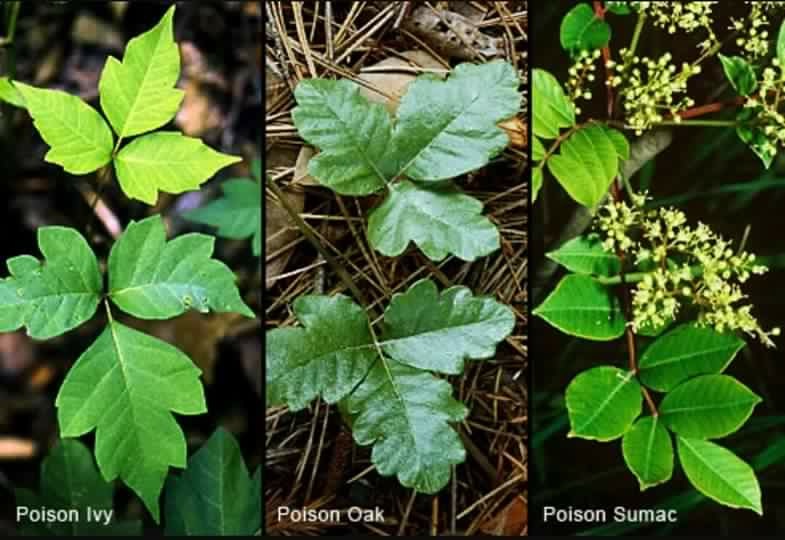 The theme for the event was poison ivy, poison oak and poison sumac. We observed poison ivy, but were neither able to locate poison oak nor poison sumac.
Poison sumac was not evident, because It is found in wet marshy areas, and we were not in a wet habitat. Poison oak does not grow in PA. People mistake poison ivy for poison oak, which grows in states south of PA, so we addressed the topics of poison ivy and poison sumac.
We discussed the three forms of poison ivy and identified each. Poison ivy can be found growing low to the ground, as a shrub, or as a hairy vine. Vines can grow up a tree, overtake the tree crown and kill it. To the untrained eye the dead tree will look alive and healthy when the crown is 100% poison ivy!
-
- Low Growing Plant
-
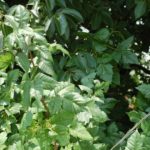
- Shrub Like
-
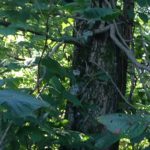
- A Vine Overtakes a Tree
Remember, “Leaves of three, let it be!” A berry plant, like blackberry or raspberry, also has three leaves, however the thorny stems are a dead give away that it is not poisonous. Poison ivy leaves of three consist of a stem with a larger leaf at the end and two smaller leaves shooting off the sides. The leaves have pointed tips and can be notched or smooth on the edges. The plant will have different appearances depending upon the season. Leaves are reddish in spring, green in summer and a yellow/orange in the fall.
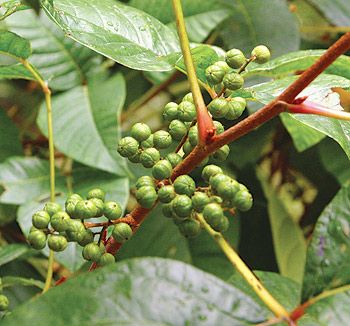 Poison ivy berries are a good source of food for many animals. Birds will eat the berries and spread the seeds through defecation; one reason you may have a problem with poison ivy under your bird feeders. Poison ivy berries are greenish-white and can be seen through the spring and summer.
One cannot discuss poison ivy with out mentioning the antidote, jewel weed. Touch Me Not is another name for this plant, because the seeds explode out of the pod when touched. If the leaves and stem of jewel weed are crushed and the juices rubbed on your skin, you will not get poison. The juices counteract the poison in poison ivy. Jewel weed flowers can be orange, yellow or spotted and hang from the plant like a jewel on a necklace.
-
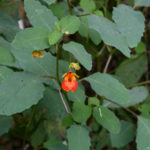
- Jewel Weed Orange Flower
-
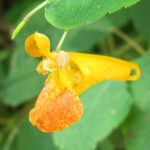
- Jewel Weed Yellow Flower
Poison Sumac is often confused with smooth sumac, staghorn sumac and tree of heaven.
-
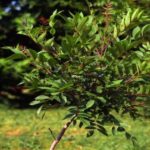
- Poison Sumac
-
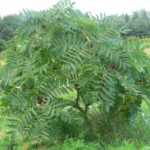
- Non-Poisonous Sumac
-
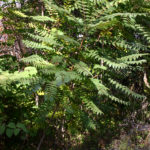
- Tree of Heaven
Poison sumac will be found in a wet marshy area while non-poisonous sumac (staghorn and smooth sumac being the most common), and tree of heaven live in poor soil and drier habitats. The leaves of poison sumac are compound, oval, elongated, and smooth-edged, usually 2-4 inches long. The stems are generally red with 7-13 leaves in pairs. Leaves are bright orange in spring, dark green in summer and red-orange in the fall. In comparison, the leaves of non-poisonous sumac are serrated and the leaves of the tree of heaven have a noticeable notch on the lower pairs of leaves at the base. Staghorn sumac branches are also covered with a soft fuzz like the velvet on a stag’s antlers.
-
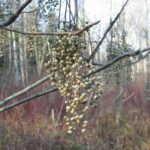
- Poison Sumac Berries
-
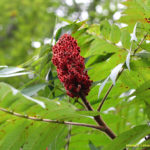
- Staghorn Sumac Berries
-
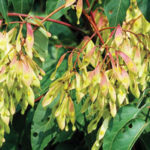
- Tree of Heaven Samara
Fruits from each of the aforementioned species also provide a means for identification. Poison sumac has white or grayish berries while staghorn sumac has small round, hairy berries in a cone shape. “White mean’s fright, red delight!”, is a saying that helps you remember which plants to stay away from. Why a delight for the staghorn sumac? Those red berries are edible and make a delicious drink when soaked in cold water and the hairs are strained out of the liquid. Add water and honey to taste.
The tree of heaven has samaras which are winged seeds found only in the female tree of heaven and are easy to differentiate from the poison and non-poisonous sumac berries.
Now you can venture into the out of doors with a clear knowledge of the most common poisonous plants to avoid in Pennsylvania. Oh, by the way. Do not touch those hairy poison ivy vines even in the winter or you may develop a case of poison ivy! If you burn poison ivy or poison sumac do not breath in the smoke or let it touch your skin or you may be very sorry!!