-

-
-
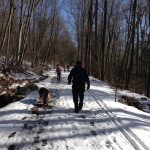
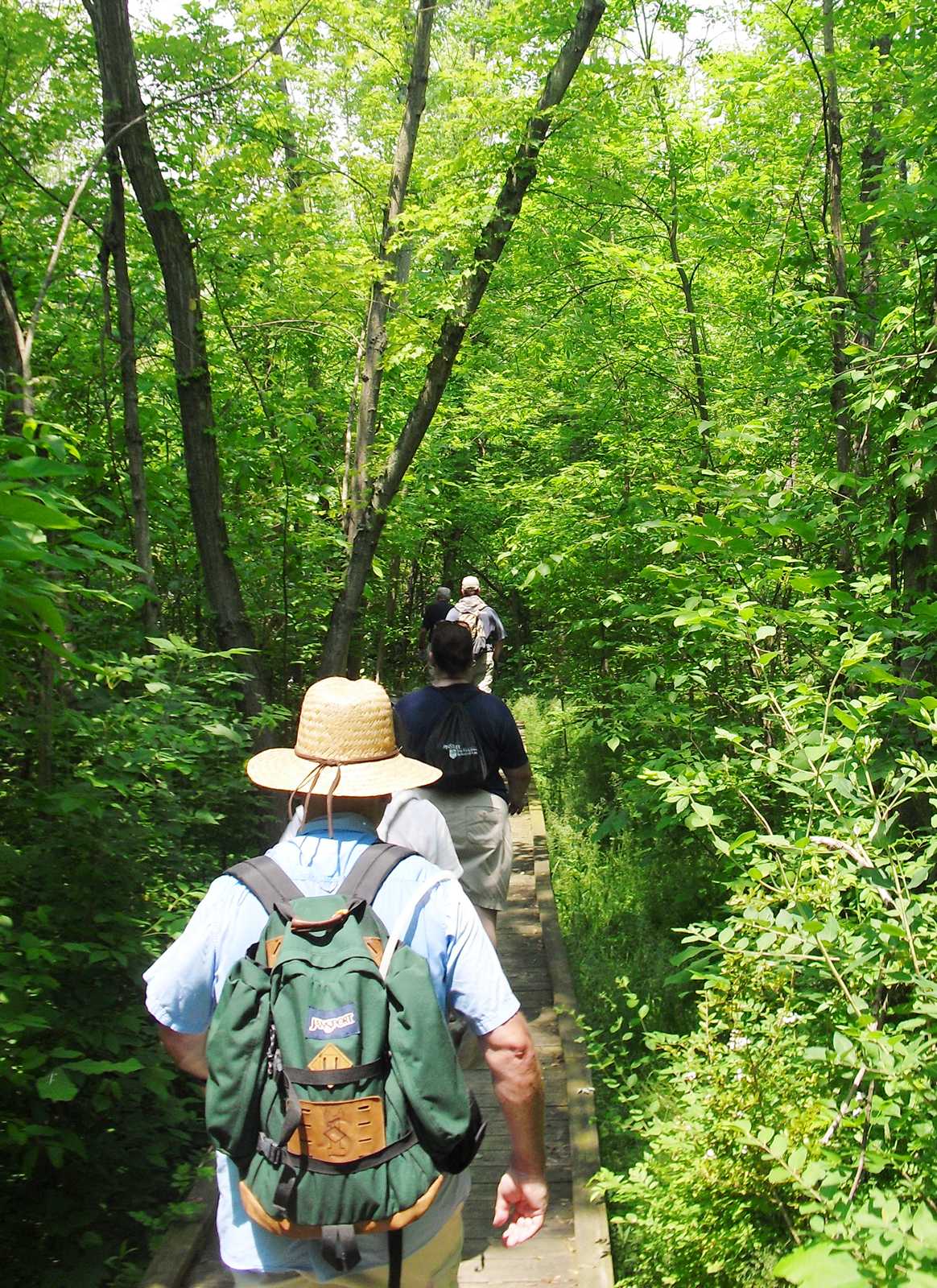
Leading the pack.
-
-
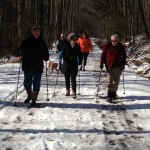
Bringing up the rear.
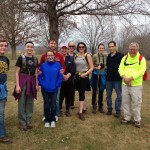
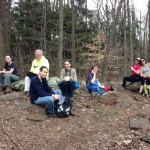
Our hike on the Stoney Valley Rail Trail was a leisurely 4 mile hike, two in and two out. The weather was perfect, almost reaching 60 degrees. While the air was warm there was still the remnants of snow and ice underfoot. It was a tad scary driving back to the trail head on a snowy, icy dirt road. At the last section if one did not stay in the tire tracks the risk of a sudden drop off the road into the forests was evident. Fortunately we all made it without incident.
Prior to the hike we had a discussion on Leave No Trace and Hiking Etiquette. A 10 question quiz started us off on an interesting talk on the do’s and don’ts of hiking. Take the quiz below and then check your answers to see how well you do.
HIKING ETIQUETTE AND LEAVE NO TRACE – TRUE OR FALSE?
1. It is okay to leave apple cores and other food items in the woods for animals to eat.
2. Defecate 200 feet and urinate 100 feet from a trail, shelter or water source.
3. Hikers should yield to mountain bikers.
4. Pass another hiker on the right and let them know you are passing.
5. Hikers stay on the uphill side when horses are passing on an incline.
6. Cairns are acceptable as a means of marking trail heads since they are made of natural material.
7. Hikers going downhill should yield to hikers coming uphill.
8. Since flora and fauna are so prevalent in the forests it is permissible to take small samples.
9. You may veer off the trail to bushwhack or follow a path that proves an easier way to traverse to conserve your energy.
10. Make all fires in a fire ring and use small diameter wood found on the ground.
Answers:
#1 False – Leaving food items will attract animals and insects into the hiking areas exposing hikers to rabies or other diseases. It also disrupts the animals’ natural foraging behaviors. Other hikers do not appreciate looking at your garbage. (Incidentally, orange peels last forever, and to my knowledge I do not know of any animal that eats orange peels!)
#2 True – Defecate by digging a cathole 6″ x 6″ x 6″ (some say 6″ x 8″), removing the dirt plug and putting it to the side. Do your duty in the hole and replace the dirt plug. Take any toilet paper and hygiene products with you. Urinate 100 ft. away from a trail, shelter, or water source, again taking any toilet paper or hygiene products with you. (When on an expedition with Outward Bound in North Carolina we rated our toilet areas. A beautiful view with a log to sit on over your cathole and a cool breeze was rated 5 stars. When you returned from your duty you were required to kiss the shovel as proof that you dug your cathole properly, YUCK!) Another tidbit of info, when brushing your teeth move 200 feet away from water sources and broadcast your spit from your mouth in a half-circular pattern to spread out the toothpaste scented water. The same holds true for disposing of waste water.
#3 False – ATV’s yield to everything, hikers and bikers yield to horses, bikers yield to hikers.
#4 False – When passing another hiker you pass on the left notifying them of your intentions by saying something like, “Passing on your left.” Greet people you meet. This will help them remember you if something should happen and a search for you is necessary. If hiking and you meet someone that gives you those creepy vibes and you are ahead of your group or worse yet, hiking alone, it is wise to say something like, ” I must be ahead of my group etc.”
#5 False – Hikers stay on the downhill side when yielding to a horse on an incline since horses usually run uphill when spooked.
#6 True or False – This question led to a lot of discussion. Some of us felt it was true while other had the opposite opinion. Upon further research it was found that cairns, piles of rocks to indicate a path, have been used since the 1800’s in the Northeastern United States, usually above the tree line. According the the Center for Outdoor Ethics it is permissible to build authorized cairns and they should not be tampered with. Otherwise cairns should not be constructed since they lead to rogue trails and confuse other hikers.
#7 True – Hikers going downhill should yield to those coming up. Still, many hikers who are climbing may yield to provide a short respite to their labors. When yielding or stopping for a rest step off the trail selecting a used area or a durable surface. When hiking in a group, it is the groups responsibility to yield to single or pair hikers. Since it is harder for a group to get of the trail often times the other hikers will let you pass first, It is their call.
#8 False – Go by the saying, “Take nothing but pictures and leave nothing but footprints.” If every hiker took plants and other items with them their would be nothing left to see, Good foragers, people picking edible plants, on the other hand will pick plants knowing to follow the policy of a sample here and a sample there leaving behind plants for regeneration.
#9 False – When you bushwhack you kill additional plants and create rogue trails which often lead to erosion. Hikers want to see nature, not a series of trails in all directions.
#10 True – Leave standing dead trees, called snags, and fallen trees alone since they provide a source of food and habitat. Do NOT cut live trees! Do not build fire rings when you can use those which already exist. Make sure you are in an area where fires are permitted. Clear all leaves and debris away from the fire ring. Make sure your fire is under control at all times and do not leave it unattended. Make sure the fire is out when done. Forest fires are most common in the late fall and early spring when there are no leaves on the trees prohibiting the sun from hitting the leaf litter on the ground and drying it out.
So how did you do? One bit of info left unsaid was the importance of keeping your noise level down in respect for other hikers, and please do not play music for others to hear. If you wish to read more about the 7 principals of Leave No Trace go to https://duncannonatc.org/leave-no-trace/.
Works cited:
Leave No Trace Center for Outdoor Ethics/LNT.org “The Leave No Trace and Cairns,” 2014 Web. 20 Mar,. 2016
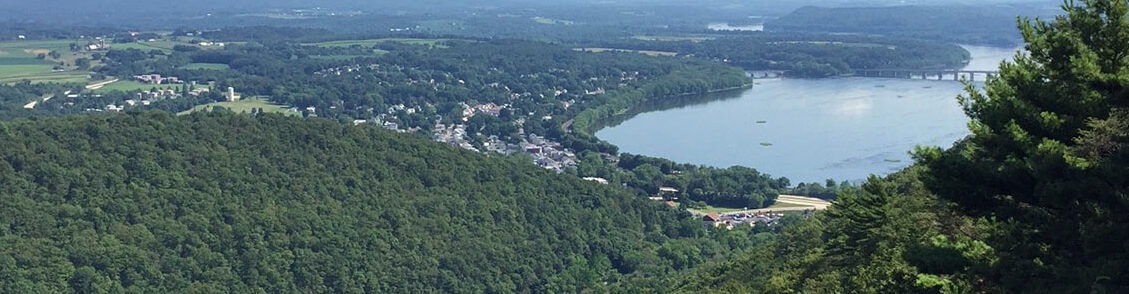
 We are fortunate to live in an area that offers many different opportunities for a day hike. We have the Appalachian Trail which can be accessed from several different trail heads, Fort Hunter Conservancy, Boyd Big Tree Preserve Conservation Area, Joseph E. Ibberson Conservation Area, and Little Buffalo State Park, just to name a few.