
Category Archives: Interesting

Interesting articles related to the AT and outdoor lifestyles.

March DOC Hike to Middle Creek

DOC Logo


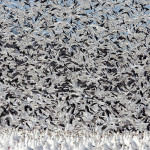
On March 12th the Duncannon Outdoor Club went to the Middle Creek Wildlife Management Area to witness the migrating Tundra Swans and Snow Geese.  Middle Creek Is an important way station providing  food and rest for waterfowl flying to northern breeding sites.  The warmer weather triggered an earlier migration, so we were lucky to see thousands of Snow Geese.  The Tundra Swans were visible only through binoculars, since they had settled down far across the lake.

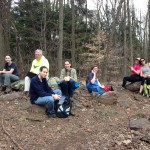
After taking pictures and observing the birds and the many people observing them, we headed to the Visitor’s Center to begin our hike along a series of trails.  We started at the Conservation Trail to Spicebush Trail, up Valley View Trail, down Horseshoe Trail, to Middle Creek Trail, up Elders Run Trail, back to Conservation Trail to the Visitor’s Center for a total of six plus miles.  The two climbs required some effort, but lunch after the first climb re-energized us for further challenges.

We could not believe that horses could traverse down the section of Horseshoe Trail which was nothing more than a narrow, steep, deep ditch down the mountain.  Horseshoe tracks confirmed that it was possible.  On the Conservation Trail we were lucky to see a vernal pool, a temporary pool of surface water, full of Wood Frog and Jefferson Salamander eggs, an early sign of spring.

north-america-migration-flyways[1]


As with every DOC event we had an outdoor educational theme.  The theme for our event was Snow Geese and Tundra Swans so we had a brief presentation before starting our hike. First we reviewed the four major flyways in North America: the Atlantic Flyway (commonly known as the Kittatinny Ridge in the Harrisburg area), the Mississippi Flyway, the Central Flyway, and the Pacific Flyway.

(Please note that the Kittatinny Ridge is being threatened by development.  Refer to Kittatinny Ridge for further information on this topic and to find what you can do to save the ridge.)

The Tundra Swans use mostly the Pacific and Atlantic Flyways to reach Northern Canada and the Northern and Western edges of Alaska breeding areas.  They leave their wintering areas at their lowest weight relying heavily on way stations like Middle Creek and the lower Susquehanna. When winter approaches, the Tundra Swans east of Point Hope Alaska winter on the Atlantic Coast flying 4,000 miles.  Swans south of Point Hope follow the Pacific flyway to their wintering areas along the Pacific Coast.

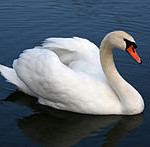
Tundra Swans have black beaks, faces, and legs.  There are small yellow spots in front of their eyes.  Holding their necks in a straight position differentiates them from the Mute Swans, a feral or domestic non-native species, which hold their necks in an  “S” position.

The Mute Swans are easy to tell apart from Tundra Swans, because they have an orange bill with a black knob at the base.  This non-native species is very aggressive, taking and defending a half square mile as its territory.  It is a very aggressive bird and will hiss, stare, hit with the wrists of its wings and attack humans.   This behavior and a voracious appetite disturbs local ecosystems displacing native species like the Tundra Swan.

Tundra Swans are dabblers used to eating animal matter and nipping off submerged aquatic plants as deep as three feet below the surface.  However, due to vanishing wetlands they have begun to feed on agricultural fields.  Nipping off the tops of plants and eating seeds left behind after the harvest.

Tundra Swans build their nests out of grasses, sedge, mosses, and lichens on the ground  in a place providing good visibility.  Their territory covers a half square mile, but does not seem to impact the local ecosystem as negatively as the Mute Swans. Tundra Swan babies, called cygnets, are born with their eyes open and are in the water 12 hours after they pip the shell. They are light gray in color, are brooded by the parents for about a week, and are ready to fly after two or three months.
Continue reading

DOC Feb. Hike: Leave No Trace and Hiking Etiquette

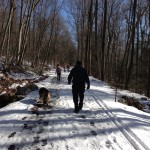
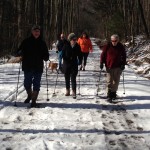
Our hike on the Stoney Valley Rail Trail was a leisurely 4 mile hike, two in and two out.  The weather was  perfect, almost reaching 60 degrees. While the air was warm there was still the remnants of snow and ice underfoot.  It was a tad scary driving back to the trail head on a snowy, icy dirt road.  At the last section if one did not stay in the tire tracks the risk of  a sudden drop off the road into the forests was evident.   Fortunately we all made it without incident.

Prior to the hike we had a discussion on Leave No Trace and Hiking Etiquette.  A 10 question quiz started us off on an interesting talk on the do’s and don’ts of hiking.  Take the quiz below and then check your answers to see how well you do.

HIKING ETIQUETTE AND LEAVE NO TRACE – TRUE OR FALSE?

    1. It is okay to leave apple cores and other food items in the woods for animals to eat.

2. Defecate 200 feet and urinate 100 feet from a trail, shelter or water source.

3. Hikers should yield to mountain bikers.

4. Pass another hiker on the right and let them know you are passing.

5. Hikers stay on the uphill side when horses are passing on an incline.

6. Cairns are acceptable as a means of marking trail heads since they are made of natural material.

7. Hikers going downhill should yield to hikers coming uphill.

8. Since flora and fauna are so prevalent in the forests it is permissible to take small samples.

9. You may veer off the trail to bushwhack or follow a path that proves an easier way to traverse to conserve your energy.

10. Make all fires in a fire ring and use small diameter wood found on the ground.

Answers:

#1 False – Leaving food items will attract animals and insects into the hiking areas exposing hikers to rabies or other diseases.  It also disrupts the animals’ natural foraging behaviors. Other hikers do not appreciate looking at your garbage.  (Incidentally, orange peels last forever, and to my knowledge I do not know of any animal that eats orange peels!)

#2 True – Defecate by digging a cathole 6″ x 6″ x 6″ (some say 6″ x 8″), removing the dirt plug and putting it to the side.  Do your duty in the hole and replace the dirt plug.  Take any toilet paper and hygiene products with you. Urinate 100 ft. away from a trail, shelter, or water source, again taking any toilet paper or hygiene products with you. (When on an expedition with Outward Bound in North Carolina we rated our toilet areas.  A beautiful view with a log to sit on over your cathole and a cool breeze was rated 5 stars.  When you returned from your duty you were required to kiss the shovel as proof that you dug your cathole properly, YUCK!)  Another tidbit of info, when brushing your teeth move 200 feet away from water sources and broadcast your spit from your mouth in a half-circular pattern to spread out the toothpaste scented water.  The same holds true for disposing of waste water.

#3 False – ATV’s yield to everything, hikers and bikers yield to horses, bikers yield to hikers.

#4 False – When passing another hiker you pass on the left notifying them of your intentions by saying something like, “Passing on your left.”  Greet people you meet.  This will help them remember you if something should happen and a search for you is necessary.  If hiking and you meet someone that gives you those creepy vibes and you are ahead of your group or worse yet, hiking alone, it is wise to say something like, ” I must be ahead of my group etc.”

#5 False – Hikers stay on the downhill side when yielding to a horse on an incline since horses usually run uphill when spooked.

#6 True or False – This question led to a lot of discussion.  Some of us felt it was true while other had the opposite opinion.  Upon further research it was found that cairns, piles of rocks to indicate a path, have been used since the 1800’s in the Northeastern United States, usually above the tree line.  According the the Center for Outdoor Ethics it is permissible to build authorized cairns and they should not be tampered with.  Otherwise cairns should not be constructed since they lead to rogue trails and confuse other hikers.

#7 True – Hikers going downhill should yield to those coming up.  Still, many hikers who are climbing may yield to provide a short respite to their labors.  When yielding or stopping for a rest step off the trail selecting a used area or a durable surface.  When hiking in a group, it is the groups responsibility to yield to single or pair hikers.  Since it is harder for a group to get of the trail often times the other hikers will let you pass first,  It is their call.

#8 False – Go by the saying, “Take nothing but pictures and leave nothing but footprints.”  If every hiker took plants and other items with them their would be nothing left to see,  Good foragers, people picking edible plants, on the other hand will pick plants knowing to follow the policy of a sample here and a sample there leaving behind plants for regeneration.

#9 False – When you bushwhack you kill additional plants and create rogue trails which often lead to erosion.  Hikers want to see nature, not a series of trails in all directions.

#10 True – Leave standing dead trees, called snags, and fallen trees alone since they provide a source of food and habitat.  Do NOT cut live trees!   Do not build fire rings when you can use those which already exist.  Make sure you are in an area where fires are permitted.  Clear all leaves and debris away from the fire ring.  Make sure your fire is under control at all times and do not leave it unattended.  Make sure the fire is out when done.  Forest fires are most common in the late fall and early spring when there are no leaves on the trees prohibiting the sun from hitting the leaf litter on the ground and drying it out.

So how did you do?  One bit of info left unsaid was the importance of keeping your noise level down in respect for other hikers, and please do not play music for others to hear.  If you wish to read more about the 7 principals of Leave No Trace go to https://duncannonatc.org/leave-no-trace/.

Works cited:

Leave No Trace Center for Outdoor Ethics/LNT.org “The Leave No Trace and Cairns,” 2014 Web. 20 Mar,. 2016

Boy Scout Troop 64: Keeping Duncannon Green

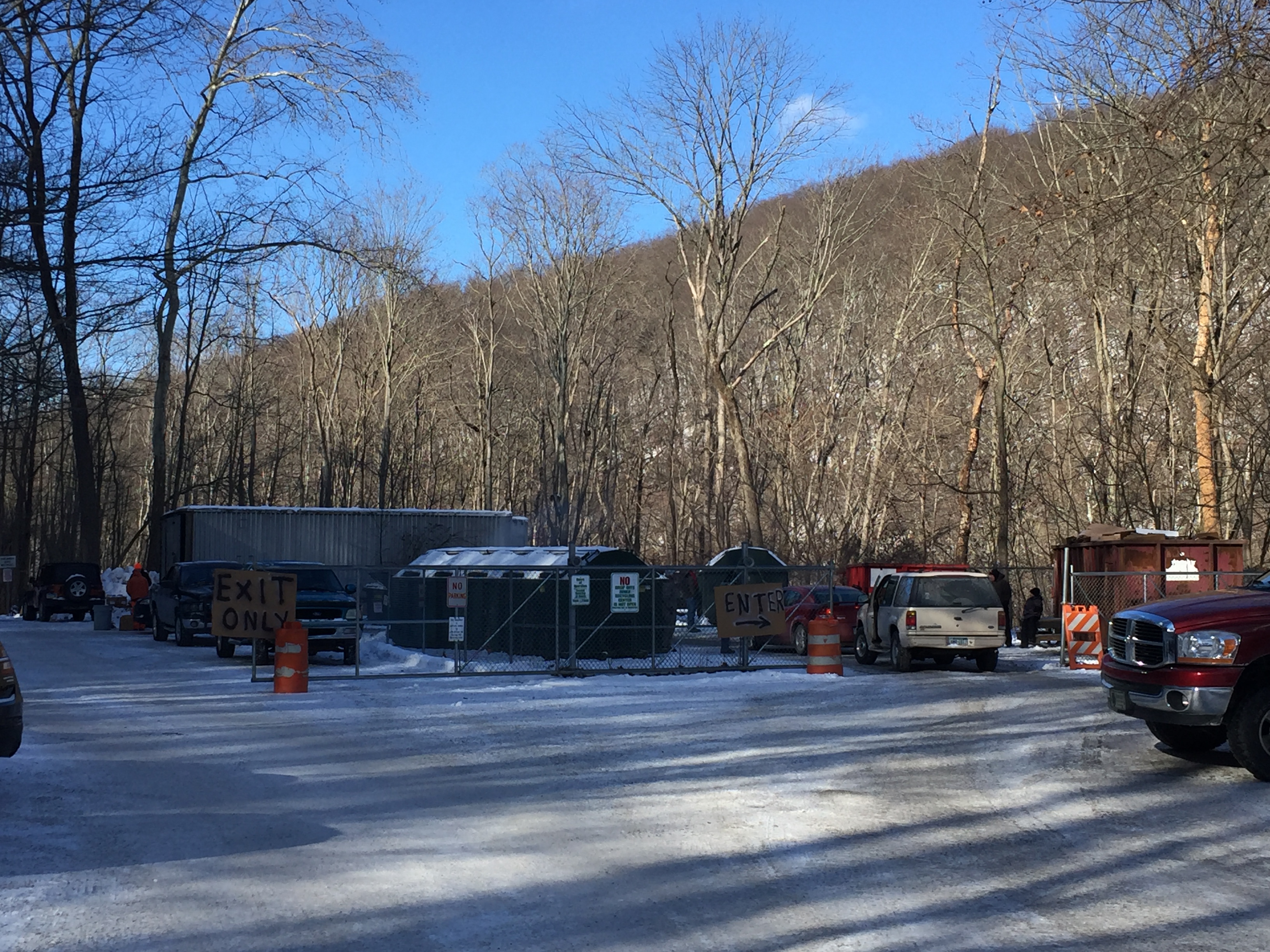
Duncannon Recycle Center February 2016The second Saturday of each month our community has the opportunity to dispose of recyclable materials, saving tons of waste from going to a landfill.  From 8-11am at the Recycling Center in Penn Township, alongside Shermans Creek, recyclable materials can be dropped off.  This is the same parking area used to access one of our favorite hiking destinations, Hawk Rock.  Borough residents can set recyclables at their front doorstep for pickup, as well.

Duncannon’s very own Boy Scout Troop 64 is to thank for this time consuming, tough and dirty work.  The Troop’s efforts in keeping Duncannon green date back to the 1940’s!  Funding for recycling in the 17020 zip code comes from Penn Township and the Duncannon Borough.  At one time this project was conducted in the parking lot of the Old Sled Works on North Market Street in the borough.

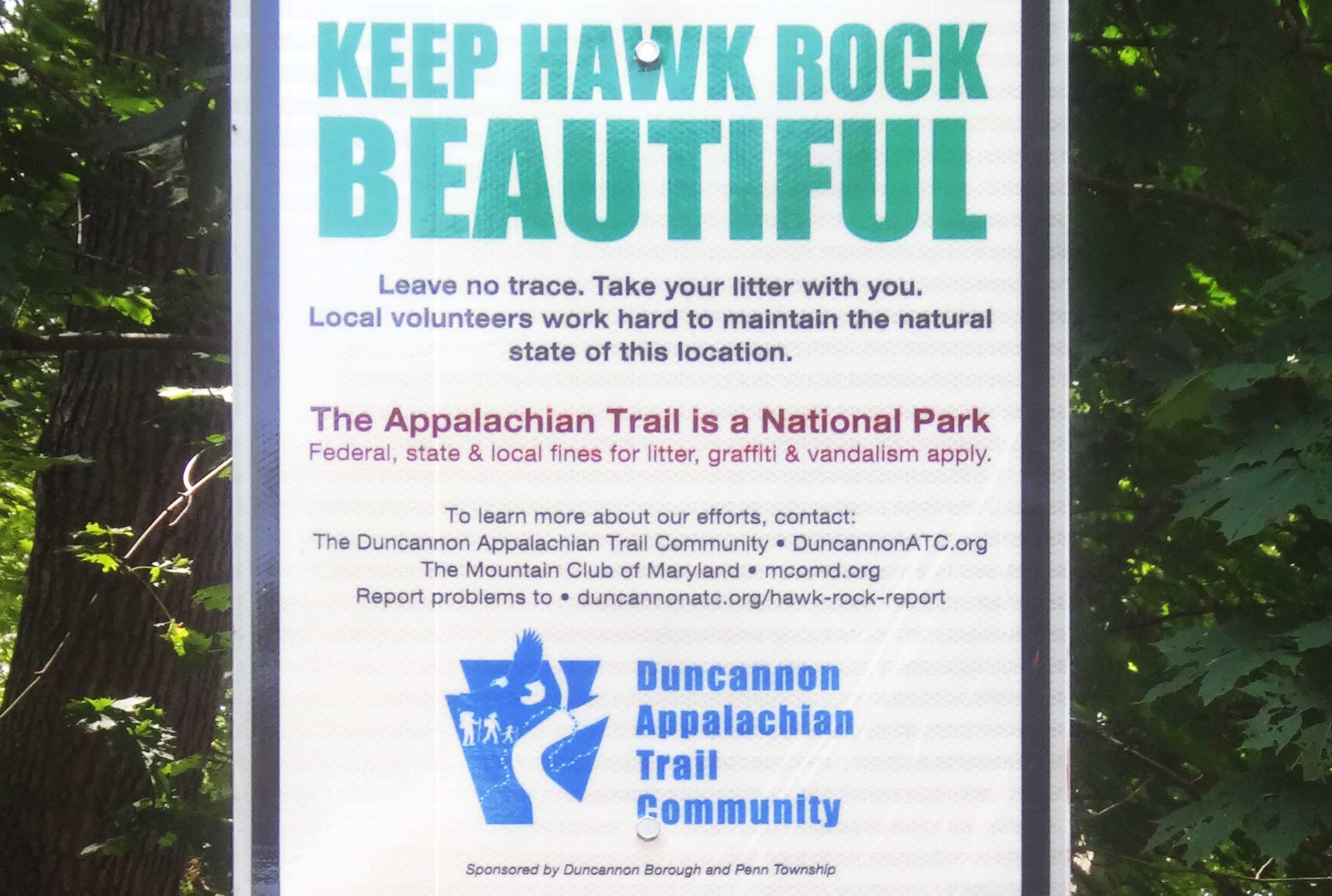
Keep Hawk Rock Beautiful - Duncannon AT SignThis past Saturday, February 13, most of us had no thoughts of climbing out from under our warm blankets. The temperature was single digit and the winds were gusting between 20 and 40 miles per hour! Yes, the sun was shining bright but if you did not have to go outside, you probably did not.  These conditions did not stop the scouts and their helpers to be at the Recycling Center before 8, bundled up awaiting tons of recyclables to be delivered.  After all they have been doing this for more than 70 years!

At one time recyclable material had more monetary value than it does today.  Also, the many rules for sorting and separating that are required now, did not exist.  These changes have not discouraged the Troop from completing the tedious work.  Residents can make the work easier for everyone involved by breaking down containers, sorting papers and separating items by the code or color.

Recycling logo wrapped around a dollar signMoney can still be collected for certain materials today such as aluminum cans.  Paper once put money back in the pocket of these dedicated scouts.  Today our paper is being sent to a Perry County farmer to be used for bedding material.  At one time there was enough money being returned to the Troop that individual scouts could earn credit for their hard work and dedication.  Scouting supplies could be purchased or camping trips paid for. This was great incentive for the young boys to continue working toward their goals.  Today, with less monetary incentive, they continue to take pride in their work and have a positive influence in their community.

Thank you and keep up the great work Boy Scout Troop 64!  Also, thank you to the Duncannon community for keeping our town green!