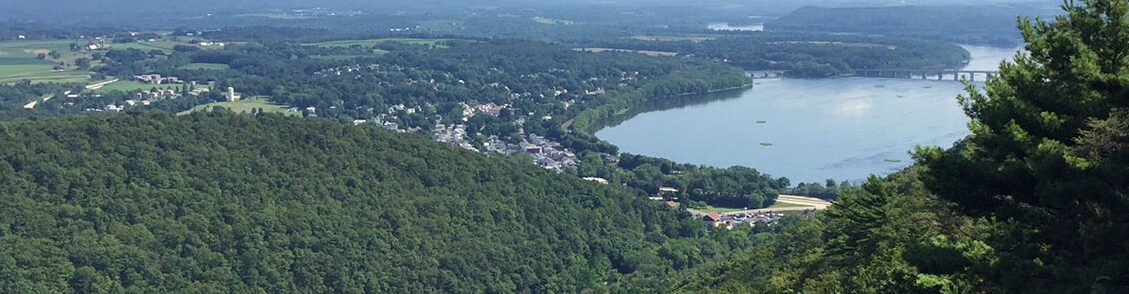
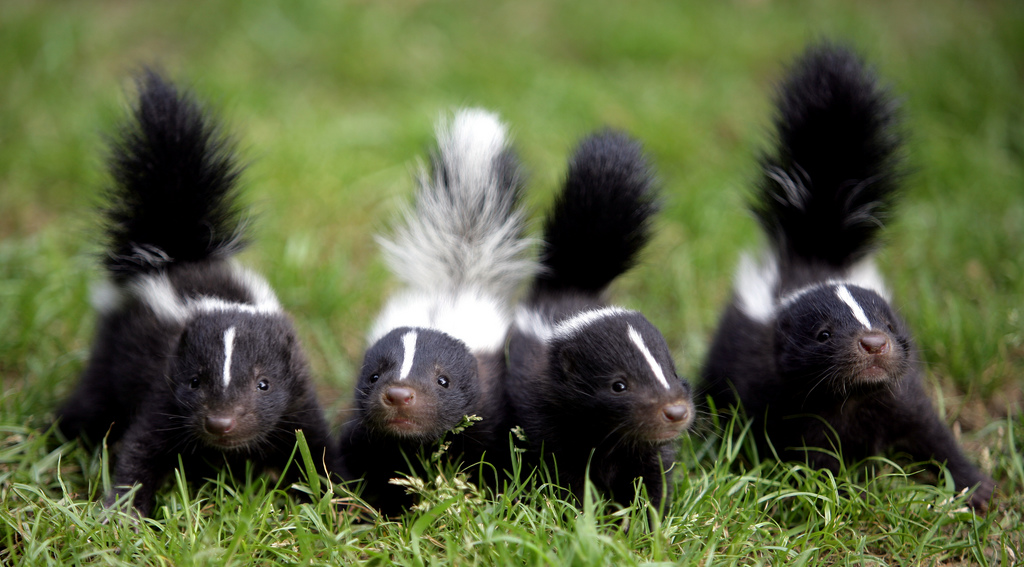
 On January 20th the Duncannon Outdoor Club hosted a hike to Pole Steeple at Pine Grove Furnace State Park. The theme for the day was the Striped Skunk which was discussed prior to departure.
Starting at the Pole Steeple Parking Lot the group hiked up to Pole Steeple, along the Appalachian Trail to Mountain Creek Trail, which looped back to the start. A thank you goes out to Patrick Walsh for leading the hike.
-

-
Meeting at the parking lot.
-

-
Reggie, the dog, wants to get going,
-
-
On top of Pole Steeple.
-

-
The lake in the distance.
-
-
Another view.
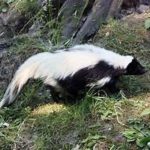
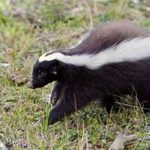
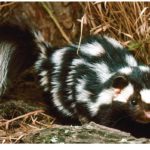
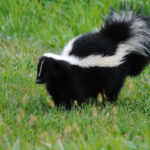
So what did we learn about striped skunks? Well, there are four kinds of skunk species that live in the United States: the hooded skunk, hognose skunk, spotted skunk, and striped skunk. The striped skunk being the species found in Pennsylvania. The word “skunk” comes from the Algonquin Indian name seganku. Polecat, woods pussy, and enfant du diable (child of the devil in French) are other names for this stinky little critter.
-
-
Hooded Skunk
-
-
Hognose Skunk
-
-
Spotted Skunk
-
-
Striped Skunk
Skunks are nocturnal and omnivorous. They sleep during the day and forage at night eating available seasonal plant and animal matter. Although they have poor hearing, sight and sense of smell, skunks are very dexterous with their paws, which have long sharp claws for digging. Their gate is in a plantigrade manner with the heel touching first and rolling off the front of the foot.
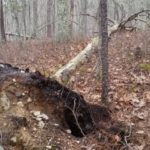
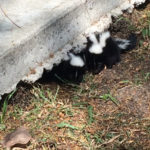
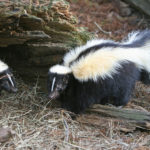
Skunks can be found in fields, towns, and woods, though they are rarely found in deep forests. During the summer months skunks usually bed down above ground hiding in grasses, logs, and even under porches! During the winter they will find an existing den, which is preferable, or dig their own. Skunks do not hibernate but enter a state of torpor where body functions become depressed with body temperature remaining near normal. They will live off body fat with females losing 10 to 30 percent of their body weight. In winter a warm spell will bring skunks out to forage for nuts, dried fruit, grasses and small mammals. Skunks have been known to den with rabbits, groundhogs, possums, and other skunks, which are usually offspring. It is common to find one male skunk denning with a group of females in an attempt to have first mating rights.
-
-
Den in the ground.
-
-
Den under a sidewalk.
-
-
Den in a log.
February to mid-April is the breeding season for skunks. The male will breed with numerous females and does not take part in the rearing of young. Males will fight for the right to mate but rarely spray one another. Females will fight off a male’s attempt at mating if she has already copulated with another. Mating is soundless and takes about one minute. Two to ten young are born 60 days later and will produce musk spray at eight days, though they will be incapable of directing that spray until three weeks of age when their eyes open. The striped skunk becomes sexually mature in its second year.
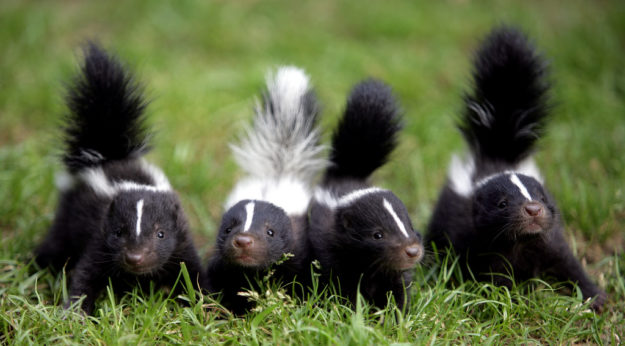
Babes on the prowl!
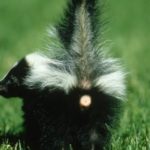
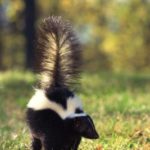
The striped skunk has three steps of defense with the third being the most productive. If threatened the skunk will first attempt to leave. If you have ever seen a skunk run you know there is little quickness involved. If the skunk cannot retreat from the situation it will growl, hiss and begin a dancing movement where it stomps its feet. (This is your warning to leave the situation.) If still threatened the skunk will next assume a “U” shaped position where its backside and head are facing you followed by a mist or spray of putrid smelling musk made of the sulphide mercaptan. This yellow oily liquid repels animals making them sick and blinding them if entering the eyes. A skunk can shoot the spray up to 12 feet.
-
-
Back Off!
-
-
Exit Stage Left!
If you have ever been sprayed by a skunk you know how difficult it is to “kill the smell”. Tomato juice baths followed by washing with soap and water or using a water soluble form of neutroleum-alpha (available at hospital supply houses) are helpful for removing the smell from your body. Wash your clothes with ammonia.
So you might think a skunk has a pretty care free life with such a defense mechanism. Such is not the case. The Great Horned Owl has a very poor sense of smell and a great liking for skunk meat.
Just remember if you are hiking and run into a skunk, and it offers to dance with you decline and exit stage left!