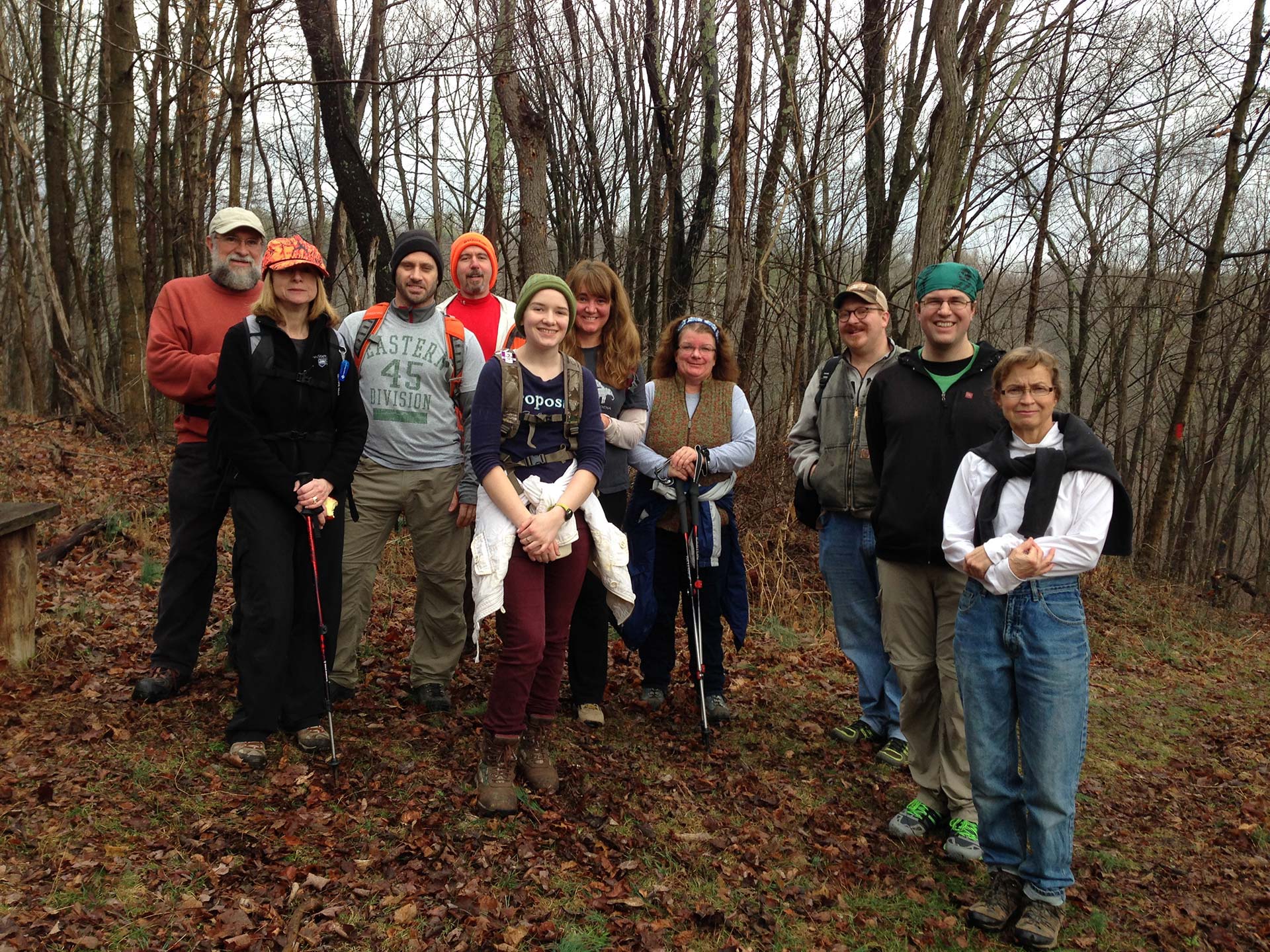
Taking a break at the top of climb number eight.
On Saturday, January the 16th a group of daring hikers braved the weather to hike the trails of Little Buffalo State Park. It was a cold, damp, drizzly morning to start and we did get rained on for a short period of time. We were fortunate that the sun did stick its head out a few times before the wind hit. With all the climbing we did the weather didn’t phase us.
A total of 5.5 miles was traversed over trails where we counted 10 climbs. We started at Middle Ridge Trail to Buffalo Creek Trail and connected with the Buffalo Ridge Trail, finally ending up at the covered bridge, then walked back to the office parking lot for the completion of the hike.
-
-
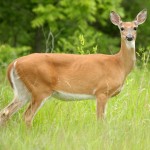
Doe, Female, White Tailed Deer
-
-
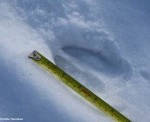
Typical deer track with dew claws not evident,
-
-
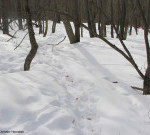
Deer trails in winter are called yards.
The theme for the event was, “The White Tailed Deer”. The white tailed deer, belonging to the Cervidae family, are referred to as Cervids meaning hooved. Most people are familiar with deer tracks which exemplify a cloven or split hoof. When deer walk through deep mud or heavier deer leave prints you can see the dew claw impressions. There are two dew claws above the back side of each hoof.
-
-
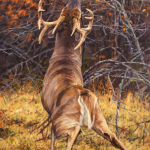
Buck eating branch ends.
-
-
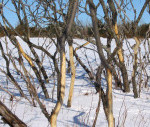
Deer eat bark in the winter.
White tailed deer are also classified ruminants meaning multiple stomachs and cud chewing animals. Deer have four stomachs. They are active at dusk and dawn making them crepuscular mammals. During this time they come out of cover, quickly eat, return to cover, regurgitate their food from the first stomach, and chew it (chewing their cud). This behavior limits the amount of time the deer are out in the open exposed to predators. Deer eating habits change depending upon what is available each season. They are vegetarians eating herbaceous and woody plants. In Spring and Summer they will feed on green plants. Hard and soft mast are their preferred food source during the fall. This includes nuts, buds, seeds,and fruit. In winter food sources are scarce when they select bark, tree branches (ends), vines, and bushes. Deer will gravitate toward food sources providing the most nutrients, one of the reasons why they prefer acorns in the fall and hemlock during the winter months. These items are high in nutritional value.
No matter the season, do not feed the deer! You may think you are helping them survive when you are really increasing their chances of death and disease. Feeding the deer disrupts the micro-organisms in their digestive track which can often lead to death. In winter deer will migrate long distances to reach feeding stations causing them to use up their fat reserves. Feeding deer results in the congregation of large groups of deer exposing them to the diseases such as: CWD, Chronic Wasting Disease, and EHD, Epizootic Hemmorrhagic Disease. Continue reading →